CARBONWEB
Assessing global drivers and functions of soil animal biodiversity and interactions in soil food webs.
CARBONWEB is an ERC Consolidator Grant awarded to Anton Potapov to achieve a global-scale synthesis in soil food webs and carbon cycling. It relies on Soil BON Foodweb monitoring network for the observational data.
MORE INFO ON THE PROJECT
Soil food webs process 90% of terrestrial primary production and regulate the second-largest carbon pool on Earth, yet their role in global carbon stabilisation remains poorly quantified. CARBONWEB is addressing this knowledge gap by testing how environmental conditions shape soil food web structure, functions, and their effects on carbon storage across global ecosystems.
The project combines Soil BON Foodweb monitoring data, EU-wide surveys and isotopic experiments, food web modelling, AI-based image analysis, and geospatial extrapolation approaches. By integrating these datasets and methods, the projects goal is to quantify global patterns and trends in soil animal biodiversity, energy fluxes, and carbon pools, and mechanistically assess their responses to climate and nutrient availability.
CARBONWEB will provide the global estimate of soil food web effects on soil functioning and carbon storage while supporting long-term monitoring of soil biodiversity.
NEWS
- Between 2025-2027, the second Soil BON Foodweb sampling campaign is planned across about 150 sites in 30 countries, with roughly 30% of these countries having already completed their sampling.
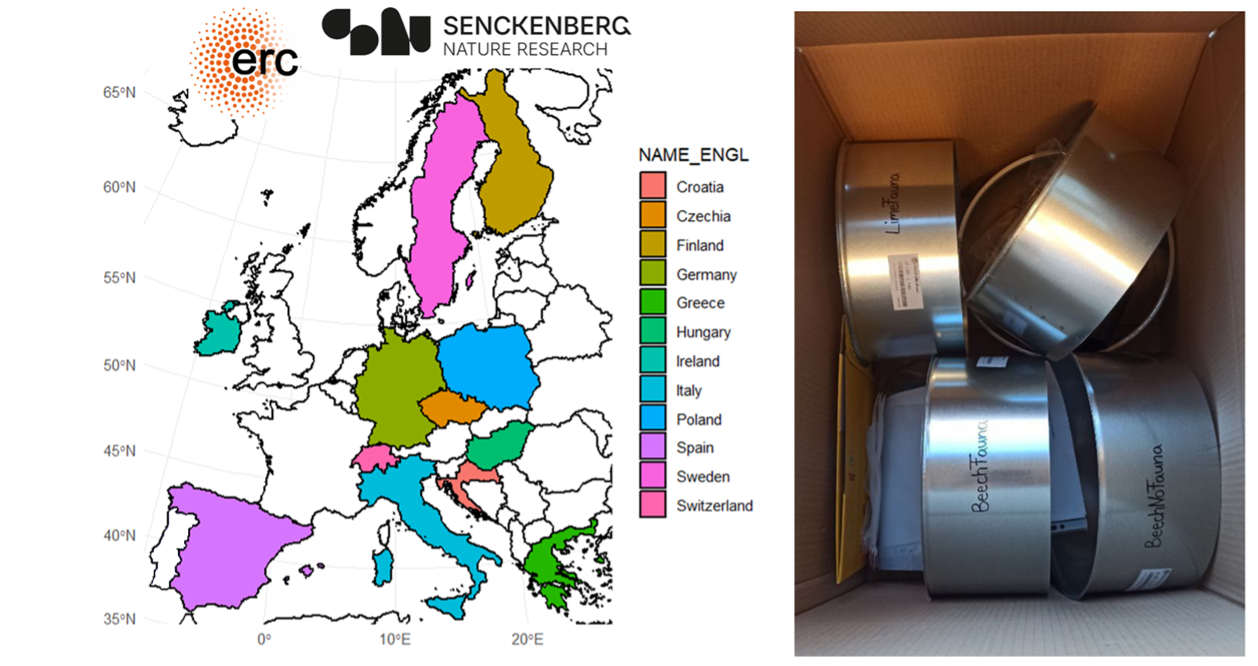
- The EU-scale field experiment, coordinated by Dr. Andrei Zuev (WP3), was launched in late 2025 and the sampling campaign is planned for October-November 2026. This experiment will assess how soil animals contribute to the translocation and stabilization of litter-derived carbon in soil organic matter.
- The study is conducted in 28 broadleaved forest sampling sites across 12 EU countries. The specific hypotheses are testing (1) marcodecomposers presence and (2) soil animal community composition effects on translocation and stabilization of litter-derived carbon in soil organic matter. Using of stable isotope label also allows us to (3) reveal the key functional groups of soil animals involved in those processes. We will access the 13C and 15N transfer from labelled leaf litter to different functional groups of soil invertebrates, as well as to soil particulate (POM) and mineral-associated (MaOM) organic matter fractions.
- Arthropovision.org: open AI-assisted image processing and analysis platform is under beta-testing; Release Candidate 0.1.9 2026-06-01
WORK PACKAGES
WP1 Coordination is the basic package that is focused on the project coordination, as well as on the acquisition, compilation, and long-term accessibility of the project data. It includes development of an open AI-assisted image processing and analysis platform.
WP2 Drivers aims to describe global, environmental, and biotic controls of structure and functioning of soil food webs using Soil BON Foodweb data.
WP3 C stabilisation complements observation (WP2) and modelling work (WP4) by experimentally testing soil food web effects on (de)stabilisation of soil organic carbon.
WP4 Modelling uses existing literature and newly produced knowledge (WP2, WP3) to parametrise a dynamic model of soil food webs and quantify the effects of animal consumers on soil functions across global environmental gradients.
WP5 Projections aims to quantify the present and potential future contribution of animal consumers to global topsoil carbon cycling
WP6 Synthesis aims to synthesise ideas and results of the project in the context of general ecological theories and aimed at proposing pipeline for integration of produced knowledge into more general biogeochemical models.
OUR TEAM

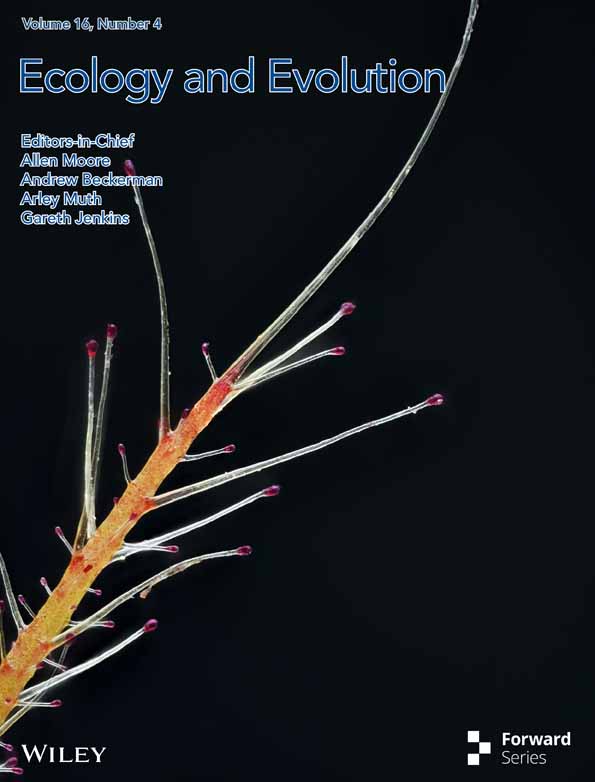 Standardized Protocols for Soil Fauna Extraction and a Call for Cross-Lab Implementation.
OUR PARTNERS